

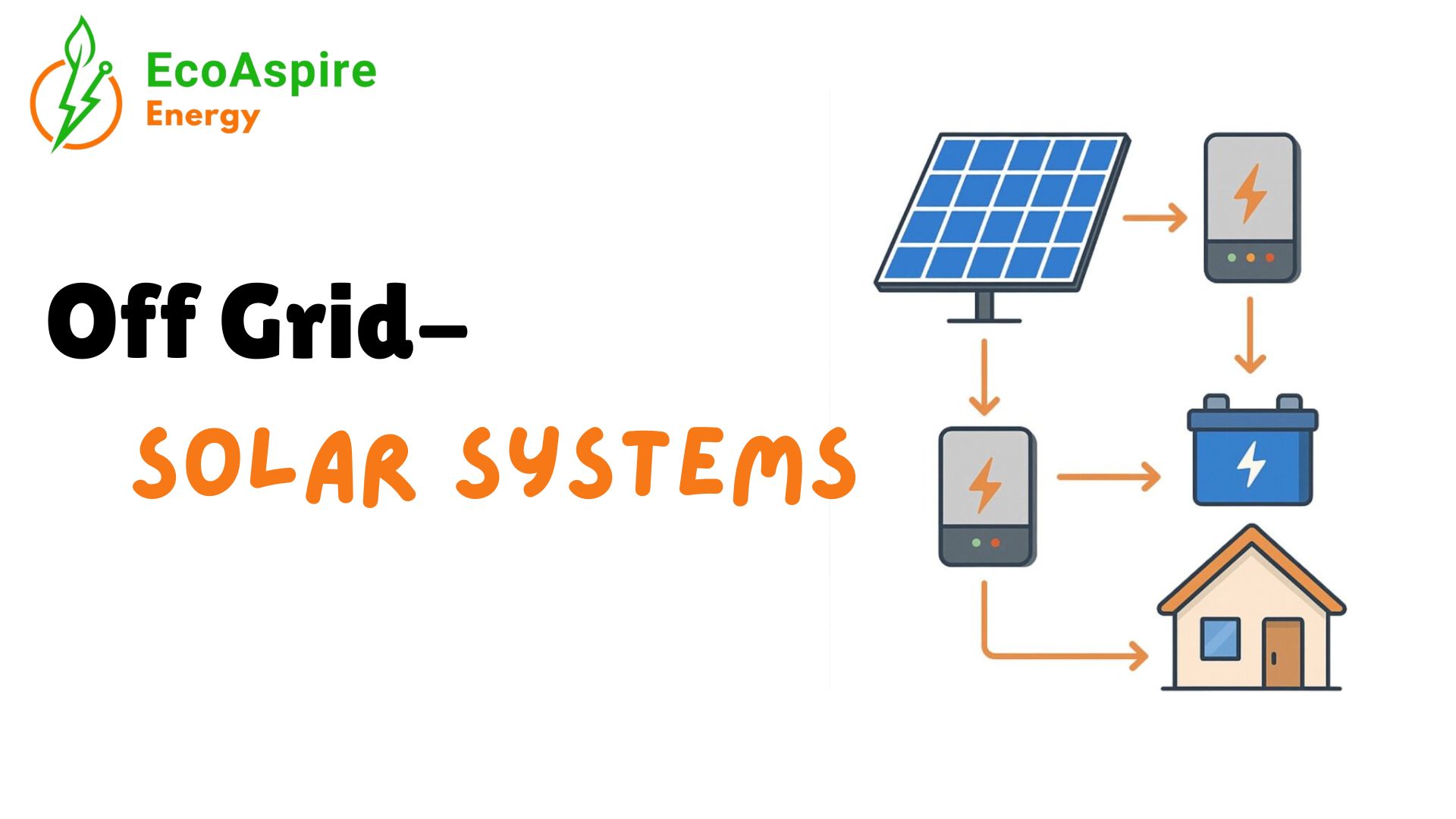
The dream of having energy independence is a popular concept on the continent. As the cost of electricity continues to rise, and the effects of climate change become more apparent, many people across the continent are asking the same question. Can you go totally off the grid with solar? At Eco Aspire Energy, we recognize that the shift to renewable energy sources is not just about saving money; it’s about security, sustainability, and independence. However, the process of achieving total independence from the grid with solar power is not an easy one. It’s a process that needs careful planning, a lot of investment, and a good understanding of your habits.
Table of Contents
ToggleIn this comprehensive article, we will discuss the possibility of off grid solar that Australia offers, the process, the cost, and the legislation. This article will help you make an informed decision on whether to go for a solar system that can work independently.
What Is Off-Grid Solar?
Off-grid solar refers to a solar power system that works independently of the main electricity grid. Instead of using electricity supplied by the main grid, a house or a farm generates its own electricity through the solar panels and stores it in the battery for use during times of no sunlight.
Off-grid solar systems have become very popular among Australians living in the country’s sunny climate. This is because, unlike other systems, an off-grid system requires you to have your own electricity supply at all times. This means you have to rely on your own electricity supply to power your house, and this electricity supply should never fail. This is the main reason off-grid systems have become very popular among people living in Australia.
There are three main categories of solar setups in Australia:
- Grid-Tied: Connected to the main power network.
- Grid-Tied with Battery Storage: Connected to the grid but stores excess energy for use at night.
- True Off-Grid (Standalone): No connection to the main grid; relies entirely on solar panels and battery storage.
While many homeowners opt for the second option to save money, true off grid solar Australia solutions are essential for remote locations or those seeking maximum resilience against blackouts.
How Does Off-Grid Solar Work?
Building a reliable off-grid system requires more than just slapping panels on a roof. It is a complex ecosystem of hardware designed to capture, store, and manage energy. To ensure safety and efficiency, all components should be installed by a SAA accredited solar installer.
An off-grid solar system consists of several critical components:
1. Solar Panels (PV Modules)
The basic building block of any solar power generation system is the photovoltaic (PV) array. In Australia, it is recommended that monocrystalline solar panels should be used in an off-grid solar power generation system because they have a higher efficiency in a limited space. You should have enough solar panels to produce power for your use as well as to charge the batteries on a cloudy day.
2. Battery Storage (Solar Batteries)
The solar battery storage system is the foundation of any off-grid system. It stores the extra solar power collected during the day, allowing you to use the stored power at night or when the sun is not shining. This is important because, at night, there’s no power backup.
- Lithium-Ion: The current standard. They offer high depth of discharge (DoD), long lifespan, and compact size.
- Lead-Acid: Older technology, cheaper upfront, but requires more maintenance and has a shorter lifespan.
- Capacity: A typical Australian home might require between 20 kWh and 50 kWh of storage to last through a night and a cloudy day.
3. Solar Inverters
Unlike grid-tied inverters that synchronize with the grid frequency, off-grid inverters create their own power frequency. Solar inverters convert the direct current (DC) power generated by solar panels into alternating current (AC) power used by household appliances. Hybrid inverters are also available, which can switch between solar, battery, and a backup generator if needed.
4. Charge Controllers
These devices regulate the voltage and current coming from the solar panels to the batteries. This prevents overcharging, which can damage the battery bank. MPPT (Maximum Power Point Tracking) controllers are highly recommended for Australian conditions as they maximize energy harvest.
5. Backup Generator
For true resilience, many off-grid systems include a backup generator (diesel, gas, or propane). This is not for daily use but acts as an emergency source during extended periods of low solar generation, such as a week of winter storms.
Benefits of Going Off-Grid With Solar in Australia
Choosing off-grid solar in Australia offers a range of compelling advantages:
- Energy Independence: No more reliance on electricity bills or grid-supplied power. You control your energy production and use it how you want.
- Lower Long-Term Costs: Although upfront costs are higher, the long-term benefit is significantly reduced electricity expenses — especially as grid prices continue to rise nationally.
- Reliable Power for Remote and Rural Areas: For many regional and remote properties, off-grid solar is often the most cost-effective solution compared with expensive grid connections.
- Environmental Sustainability: By generating clean solar energy and storing it with batteries, your carbon footprint is dramatically reduced.
- Potential to Sell Power Back to Micro-grids or VPPs: While strictly off-grid systems don’t export to the main grid, battery systems connected to Virtual Power Plants or local micro-grids can provide additional income streams in some areas (especially in NSW).
Grid vs Off-Grid Solar in Australia
Choosing between grid-connected solar and off grid solar Australia depends on your location, budget, and energy goals. Grid systems stay connected to the electricity network and help reduce power bills, while off-grid systems use solar panels and battery storage to provide complete energy independence.
The table below compares both options to help you decide which solar system is right for you in Australia.
Feature | Grid Solar System | Off Grid Solar System |
Grid Connection | Connected to the main electricity network | Not connected to the grid |
Electricity Bills | Reduced bills (but still pay supply charges) | No electricity bills |
Energy Independence | Partial independence | 100% energy independence |
Solar Battery Required? | Optional (for backup & savings) | Essential for power at night |
Feed-in Tariff | Can earn money by exporting excess solar | No feed-in tariff (not connected) |
Cost | Lower initial cost | Higher upfront cost |
Maintenance | Low | Moderate (battery monitoring required) |
Government Incentives | Eligible for STCs & rebates | Eligible for STCs & battery rebates |
Backup Generator Needed? | No | Sometimes recommended |
Long-Term Savings | High savings over time | Very high long-term savings |
Costs and Incentives
If you’re looking at an off grid solar Australia system, it’s essential to understand the costs and the incentives available. While going off-grid provides you with the benefits of autonomy and the ability to avoid rising electricity bills, it also requires an upfront cost.
The good news is that government rebates and incentives can reduce your costs and increase long-term savings.Here is a quick look at what you can expect to pay, where you can save, and how Australia’s programs make off-grid solar more affordable.
The total cost of an off-grid solar system depends on system size, battery capacity, equipment quality, and installation complexity. Typical cost ranges in Australia (before incentives) include:
- Solar Panels: High-efficiency panels that capture maximum sunlight are crucial for off-grid systems.
👉 Approx. $8,000 – $15,000 for a standard 8–12 kW system - Solar Battery Storage: Battery storage is essential for energy independence and night-time power supply.
👉 Approx. $10,000 – $30,000 before rebates - Inverters & System Components: Inverters convert solar electricity into usable AC power for your home.
👉 Approx. $4,000 – $10,000 - Installation & Professional Labour: Professional installation ensures safety, compliance, and maximum energy efficiency.
👉 Approx. $3,000 – $7,000 - Backup Generator (Optional): Many off-grid systems include a backup generator to cover extended periods of low sunshine.
👉 Approx. $2,000 – $6,000
Government Incentives and STCs
In Australia, the Small-scale Technology Certificate (STC) scheme helps reduce the upfront cost of solar installations. However, the rules for off-grid systems can differ from grid-tied systems.
- STCs: You can still claim STCs for off-grid systems, but the calculation may vary based on the location and system size.
- State Rebates: Some states, such as Victoria and NSW, offer battery rebates. However, these are often targeted at grid-tied systems with battery storage.
- Remote Energy Programs: If you are in a remote area, check with your state government for specific remote energy programs that may subsidize the cost of diesel replacement with solar.
Note: Always check the latest regulations on the Clean Energy Council website or consult with Eco Aspire Energy for the most current rebate information.
Is Off-Grid Solar Right for You?
Going fully off-grid with solar in Australia is very practical and achievable in 2026, particularly with the Australian government rebates and incentives and the advent of new solar battery technologies. Whether you have a bush block in the Australian outback, wish to break free from escalating electricity costs, or simply desire to have a sustainable lifestyle, going off-grid with solar in Australia provides an opportunity for you to have your own independent source of electricity.
At Eco Aspire Energy, we have the expertise in providing you with bespoke off-grid solar systems to meet your unique requirements in Melbourne, Victoria.
Talk to us today about how off-grid solar can transform the way you power your life and start your journey toward energy independence.