

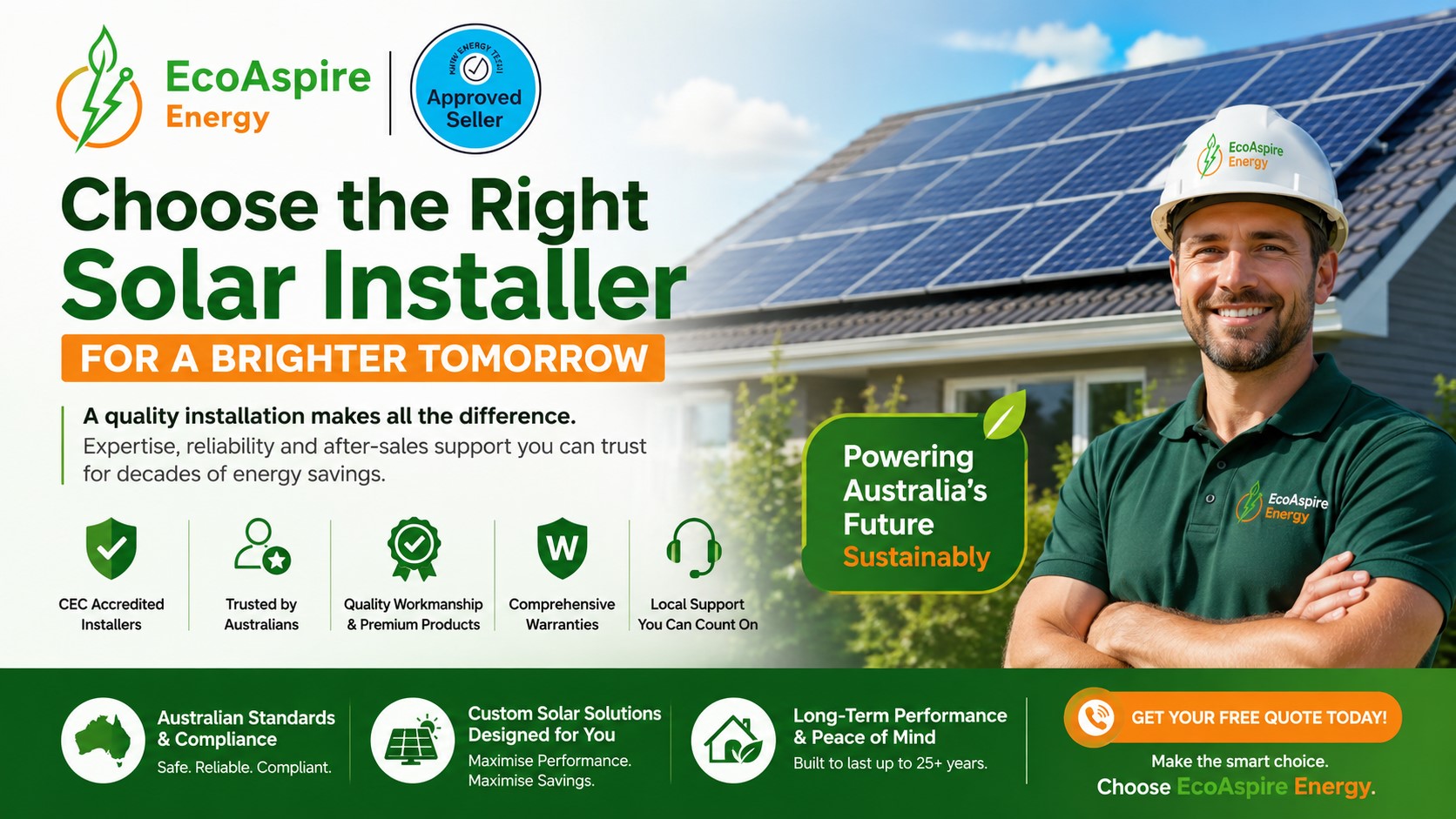
Australia’s solar industry continues to grow rapidly as more homeowners and businesses look for ways to reduce electricity costs, increase energy independence, and lower their environmental impact. While choosing high-quality solar panels and batteries is important, selecting the right installer is arguably the most critical decision you will make during your solar journey.
Table of Contents
ToggleA premium solar system installed poorly can underperform, experience safety issues, and cost thousands of dollars in future repairs. On the other hand, a professionally designed and installed system can provide decades of reliable energy savings.
If you’re trying to choose a solar installer in Australia, this comprehensive guide will help you understand exactly what to look for, what questions to ask, and how to avoid costly mistakes.
Why Your Solar Installer Matters More Than the Brand
Many Australians spend weeks comparing solar panel brands, battery models, and inverter specifications. However, even the best equipment can fail to deliver expected results if the installation is not completed correctly.
A skilled and experienced installer ensures that your panels are placed at the right angle, properly wired, and safely connected to your home’s electrical system. Poor installation can lead to energy loss, system faults, or even safety risks like electrical issues or roof damage. On the other hand, a professional installer will design a system that matches your energy needs and local weather conditions, helping you get the maximum return on your investment.
Installers also handle compliance with Australian standards, grid connection approvals, and warranty requirements. This means if something goes wrong, you are not left dealing with complicated technical or legal issues alone. Good installers also provide after-sales support, regular maintenance advice, and fast repairs when needed.
Check for NETCC Approved retailer
One of the first things to look for is New Energy Tech Consumer Code (NETCC) accreditation. NETCC-accredited retailer have undergone industry-recognised training and must comply with strict Australian installation standards. Most government solar rebates and incentives also require installations to be completed by accredited professionals. Before signing any contract, verify that your installer holds current accreditation and has qualified technicians performing the work.
Benefits of choosing a NETCC-accredited installer include:
- Compliance with Australian regulations
- Eligibility for government solar incentives
- Higher installation standards
- Ongoing professional development
- Better consumer protection
Always ask who will physically install your system and confirm that the installer holds current accreditation.
Review Customer Feedback Carefully
Online reviews can provide valuable insights into the customer experience. When reading reviews, focus on recurring themes rather than individual comments. Strong installers consistently receive positive feedback regarding workmanship, reliability, and customer service. Pay particular attention to reviews that discuss experiences several months after installation, as these often reveal how companies perform once the installation is complete.
Look for feedback about:
✅ Communication
✅ Installation quality
✅ Professionalism
✅ After-sales support
✅ System performance
✅ Problem resolution
Evaluate Installation Quality, Not Just Price
One of the most common mistakes Australians make is choosing the cheapest quote. Solar systems are long-term investments expected to operate for 20–30 years. Small savings upfront can lead to significantly higher costs later if workmanship or component quality is compromised.
A slightly higher investment today can often result in better performance, greater reliability, and higher long-term savings.
Instead of focusing solely on price, compare:
- Installation quality
- Equipment quality
- Warranty coverage
- Installer experience
- Customer reviews
- Ongoing support
Ask About Warranties
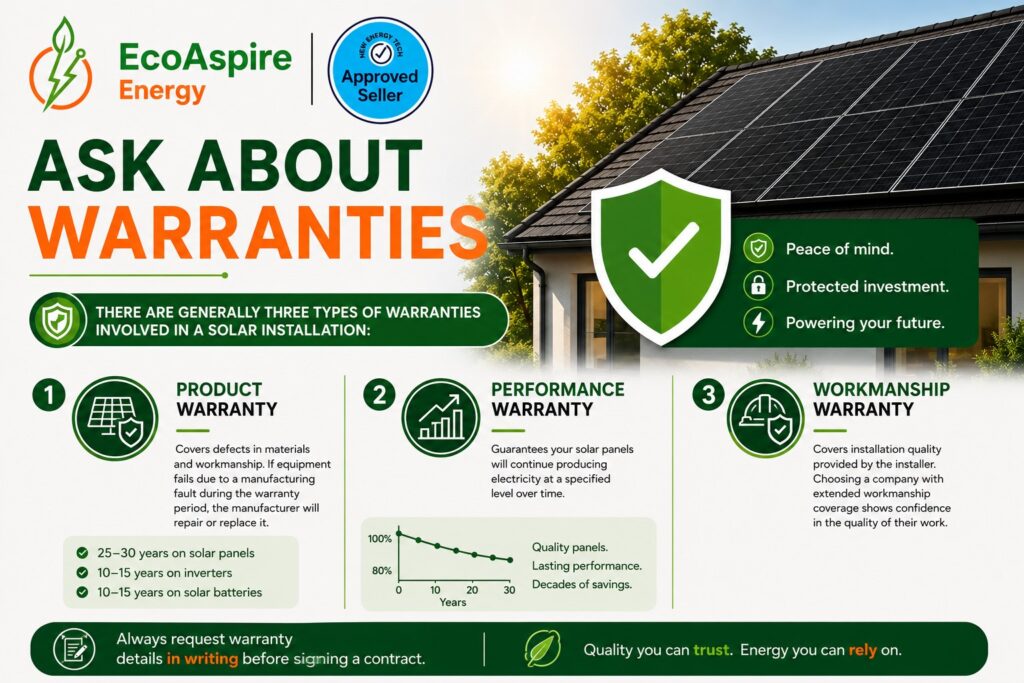
A trustworthy solar installer should confidently stand behind their work. Warranties provide peace of mind that your investment is protected and that any issues will be addressed without unexpected costs. Before signing a solar contract, make sure you understand the different warranties that apply to your system and what each one covers.
There are generally three types of warranties involved in a solar installation:
1. Product Warranty
Provided by the manufacturer, a product warranty covers defects in materials and workmanship. If a solar panel, inverter, or battery fails due to a manufacturing fault during the warranty period, the manufacturer will repair or replace the equipment.
Premium solar brands often offer:
- 25–30 years product warranty on solar panels
- 10–15 years warranty on inverters
- 10–15 years warranty on solar batteries
2. Performance Warranty
A performance warranty guarantees that your solar panels will continue producing electricity at a specified level over time. While all solar panels naturally experience some degradation, quality manufacturers guarantee that their panels will maintain a high percentage of their original output for decades.
3. Workmanship Warranty
Provided by the installer and covers installation quality. Many installers offer workmanship warranties of only one to two years. Choosing a company that provides extended workmanship coverage demonstrates confidence in the quality of their installations. Always request warranty details in writing before signing a contract.
Ensure the System Is Custom Designed
A professional installer should conduct a thorough assessment of your property before providing recommendations. Be cautious of companies offering generic packages without conducting a proper assessment. The best solar systems are designed specifically for your household or business rather than using a one-size-fits-all approach.
A quality solar installer should analyse:
- Electricity usage patterns
- Roof orientation
- Shading conditions
- Future energy needs
- Battery requirements
- Electric vehicle charging plans
Understand Battery Installation Expertise
Battery storage is becoming increasingly popular throughout Australia. With government battery incentives becoming available and electricity prices continuing to rise, many homeowners are looking to maximise self-consumption and reduce grid dependence. Battery installations require additional expertise beyond standard solar systems.
Important considerations include:
- Battery sizing
- Backup power capability
- Hybrid inverter compatibility
- Emergency power requirements
- Future expansion options
Choose an installer with proven experience in both solar and battery installations rather than one that focuses only on solar panels.
Ask About Government Rebates
When choosing a solar installer in Australia, it’s important to ask about available government rebates and incentives. These rebates can significantly reduce the upfront cost of your solar system, making it more affordable for homeowners.
In Australia, most solar installations are supported by the Small-scale Renewable Energy Scheme (SRES), which provides Small-scale Technology Certificates (STCs). A reputable installer should automatically apply these rebates to your quote and clearly explain how much you are saving.
The best installers handle most of the paperwork on your behalf, making the process straightforward and stress-free.
A professional installer should explain:
- Help you understand how STC rebates reduce your system cost
- Include rebate calculations transparently in your quotation
- Guide you through eligibility requirements
- Ensure all paperwork is handled correctly
- Inform you about any additional state-based incentives (if available)
Consider Local Support and Service
Solar systems require ongoing monitoring and occasional maintenance. Choosing a company with a strong local presence can make future support much easier. A long-term relationship with your installer can be extremely valuable throughout the lifespan of your solar system.
Benefits of local support include:
- Faster response times
- Easier warranty claims
- Better understanding of local regulations
- Ongoing customer service
Evaluate After-Sales Support
After-sales support is one of the most important factors to consider when choosing a solar installer, but it is often ignored. A solar system is a long-term investment, and it does not end once the installation is complete. You need ongoing support to ensure your system continues to perform efficiently for many years.
Good after-sales service means the installer is available to help if something goes wrong, such as system faults, inverter errors, or performance drops. It also includes regular maintenance advice, system monitoring support, and quick response times when repairs are needed. Without proper support, even a high-quality solar system can become difficult and expensive to manage.
Reliable installers also help with warranty claims, which can be confusing if you try to handle them directly with manufacturers. A strong after-sales team makes the entire process smoother, saving you time and stress.
Warning Signs to Avoid
While many Australian solar installers operate professionally, there are warning signs consumers should watch for.
Avoid installers that:
- Use aggressive sales tactics
- Pressure you into immediate decisions
- Refuse site inspections
- Offer unrealistically low prices
- Cannot provide accreditation details
- Have limited customer reviews
- Provide vague warranty information
- Use generic system designs
A trustworthy installer focuses on education and transparency rather than sales pressure.
Why Experience Matters
When you choose solar installer Australia, experience plays a crucial role in ensuring the quality, safety, and long-term performance of your solar system. An experienced installer understands how to design systems based on your roof structure, energy usage, and local Australian weather conditions, ensuring maximum efficiency and energy output.
They are also more skilled in handling installation challenges, following Australian standards, and avoiding costly mistakes that can reduce system performance over time. While less experienced installers may offer cheaper prices, they often lack the practical knowledge needed for reliable system design and proper installation. By selecting a company with proven industry experience, you improve your chances of getting a durable, high-performing solar system that delivers better savings and long-term value.
Why Choose Eco Aspire Energy
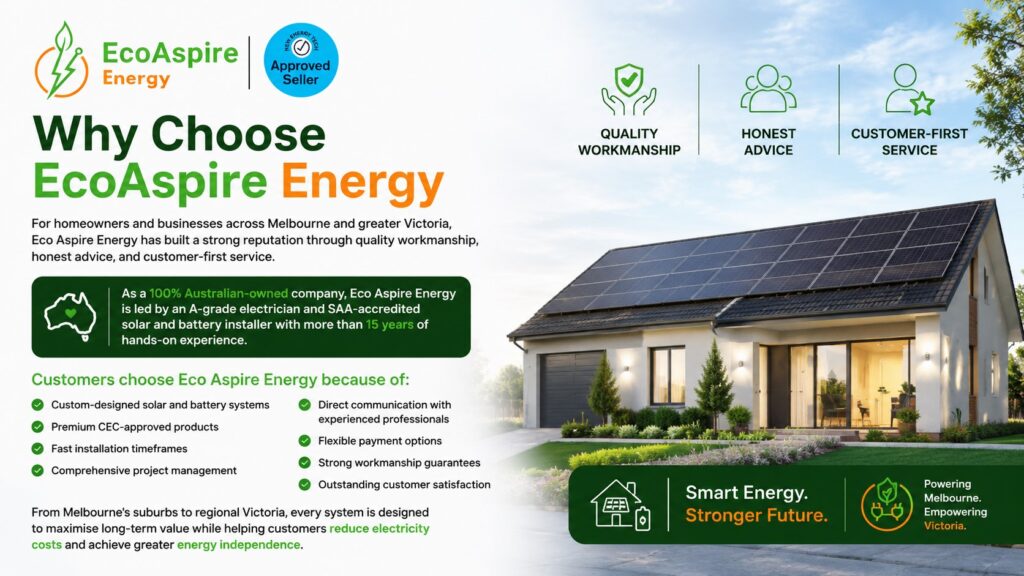
For homeowners and businesses across Melbourne and greater Victoria, Eco Aspire Energy has built a strong reputation through quality workmanship, honest advice, and customer-first service.
As a 100% Australian-owned company, Eco Aspire Energy is led by an A-grade electrician and SAA-accredited solar and battery installer with more than 15 years of hands-on experience.
Customers choose Eco Aspire Energy because of:
- Custom-designed solar and battery systems
- Premium CEC-approved products
- Fast installation timeframes
- Comprehensive project management
- Direct communication with experienced professionals
- Flexible payment options
- Strong workmanship guarantees
- Outstanding customer satisfaction
From Melbourne’s suburbs to regional Victoria, every system is designed to maximise long-term value while helping customers reduce electricity costs and achieve greater energy independence.
Our Installation Process
Why Eco Aspire Energy as your rooftop Solutions provider?


A quick consultation with our solar expert to discuss your solar needs.

We will propose and design a customized solar solution for you.

Our solar experts will review the design before installation.


Our team will take care of all the paperwork and permits.

We install a solar system and connect it to the power grid.

The solar system is tested and put into operation.


We will get your meter configured.

Final monitoring system setup and warranty information.

Lifetime support.
Final Thoughts
Choosing the right solar installer in Australia is one of the most important decisions you’ll make when investing in solar energy. Instead of focusing solely on equipment brands or the lowest quote, take time to evaluate installer experience, accreditation, workmanship warranties, customer reviews, battery expertise, and long-term support.
Before making your final decision, consider asking:
- Are your installers SAA accredited?
- What brands do you recommend and why?
- What warranties are included?
- How many systems have you installed?
- Do you provide post-installation support?
- Can I see customer reviews or case studies?
- Is the system battery-ready?
- What monitoring tools are included?