

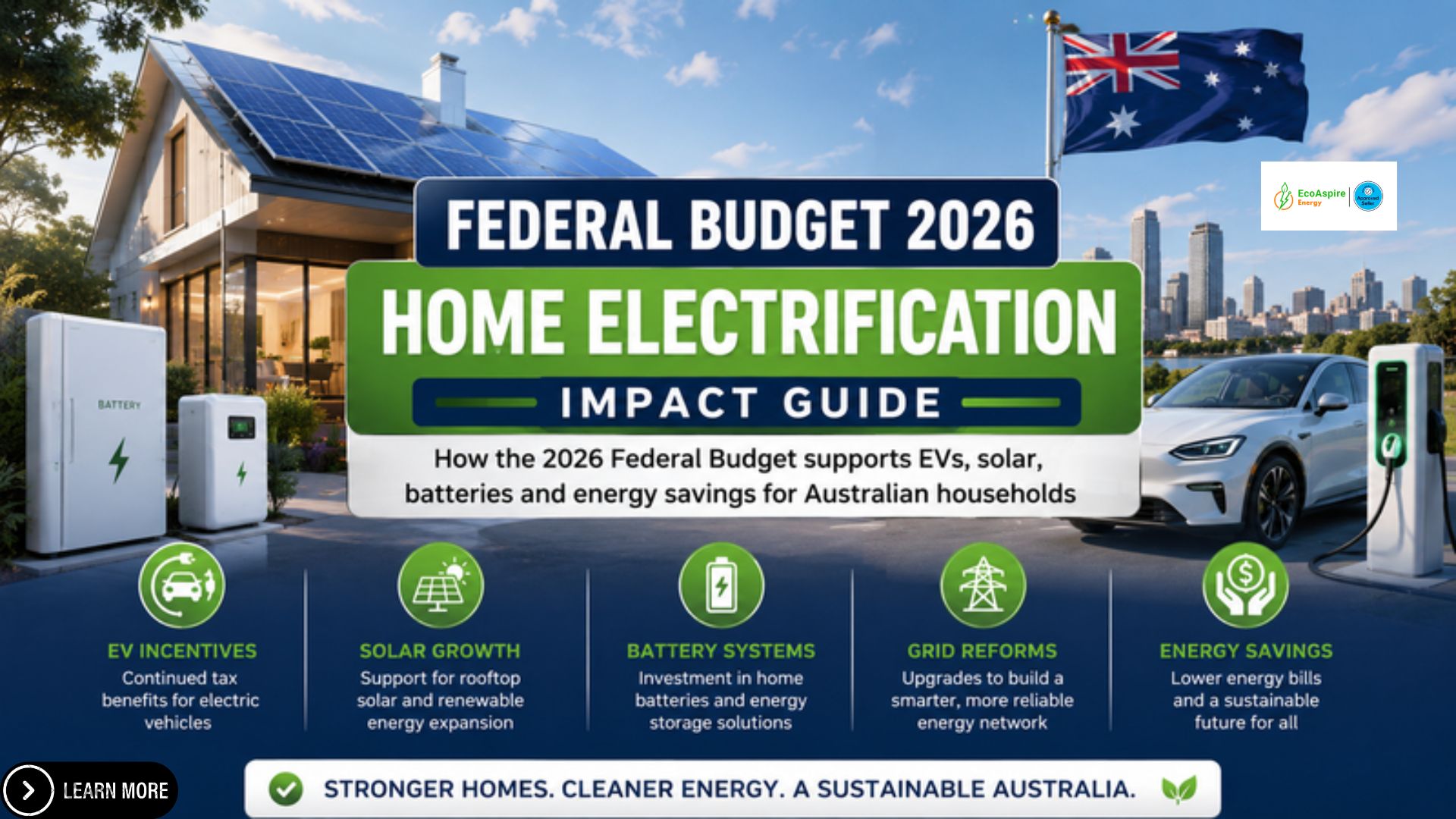
The federal budget supports home electrification by expanding EV incentives, battery systems, solar growth, and grid reforms. While no major new household rebate is introduced, the government continues long-term investments in clean energy infrastructure, consumer energy resources, and market regulation to accelerate Australia’s transition toward sustainable homes.
Table of Contents
ToggleFederal Budget 2026 Energy Strategy: Key Policy Direction Explained
The Federal Budget is designed around one clear direction—accelerating Australia’s shift to clean and electrified homes. Instead of offering large one-off rebates, the focus is on structural support, market reform, and infrastructure development.
This means households may not see direct cash incentives, but long-term benefits through lower energy costs and better energy systems.
Key focus areas:
- Renewable energy expansion
- EV infrastructure development
- Battery storage adoption
- Grid modernization
- Consumer energy protection
EV Incentives and Tax Changes Explained
Electric vehicle support remains a key part of Australia’s energy transition, but the Budget confirms a gradual scaling back of tax benefits.
What is changing?
- EV Fringe Benefits Tax (FBT) discount becomes permanent at 25%
- Luxury EV support reduced over time
- Transition fully applies by 2029
Real impact: EV buyers will still receive benefits, but high-cost vehicles will receive less advantage over time.
Example: A $90,000 EV will not enjoy the same exemption as before, but still receives partial tax relief.
EV Incentive Comparison Table
Category | Old System | New System |
EV Tax Benefit | Full exemption | 25% FBT discount |
Luxury EV Support | Higher benefit | Reduced benefit |
Timeline | Immediate | Gradual until 2029 |
Home Batteries and Rooftop Solar Growth
Australia’s rooftop solar and battery adoption continues to expand rapidly, even without new rebates.
Key insights:
- 4 million+ homes already have solar
- 370,000+ batteries installed recently
- Battery adoption expected to reach 2 million homes by 2030
Why this matters:
Households are moving toward self-powered energy systems, reducing dependency on grid electricity.
Practical benefits:
- Lower electricity bills
- Energy independence
- Backup power during outages
How Solar and Batteries Are Reshaping Australia’s Energy Market
The government is redesigning how households interact with the energy grid.
A new regulatory system ensures solar, battery, and EV systems integrate smoothly into national energy markets.
Key developments:
- Consumer Energy Resources regulator introduced
- Better export pricing for solar users
- Grid flexibility improvements
Your home energy system is no longer just consumption-based—it becomes part of the national energy supply.
Battery Safety and Inspection Programs
Battery adoption brings safety responsibilities, which the Budget addresses through inspection funding.
What is included:
- Battery inspection compliance support
- Safety monitoring systems
- Installation standard enforcement
Why it matters:
As battery usage increases, safety regulations ensure long-term reliability and consumer protection.
Important Safety Tips
- Always use certified installers
- Regular battery maintenance
- Follow grid compliance rules
- Avoid unapproved battery systems
Solar Panel Recycling Initiative
A national recycling pilot program is introduced to manage solar waste responsibly.
Program highlights:
- 100+ collection sites planned
- Reduced landfill waste
- Circular economy support
Environmental benefit: Old solar panels are now reused or recycled instead of being dumped.
Workforce Expansion for Electrification
Australia is facing a skilled labor shortage in electrification sectors.
Government response:
- Faster skilled migration approvals
- Increased electrician availability
- Support for plumbing and HVAC trades
Impact on homeowners:
- Faster installations
- Lower labor delays
- Better service availability
Instant Asset Write-Off Impact
Small energy businesses benefit from a permanent tax rule.
Key update:
- $20,000 instant asset write-off made permanent
- Helps solar installers and small contractors
Business impact:
- Improved cash flow
- Easier equipment upgrades
- Faster project execution
Business Benefit Table
Factor | Benefit |
Cash Flow | Improved liquidity |
Tax Relief | Immediate deduction |
Equipment Upgrade | Easier investment |
Air Conditioner Price Changes Under Federal Budget
Import tariffs on air conditioners are being removed to reduce costs.
Expected results:
- Lower appliance prices
- Easier access for households
- Increased energy-efficient upgrades
Real-life example: Installing a new inverter AC may become slightly cheaper due to reduced import tax.
Access to Technical Standards
The budget supports free access to technical installation standards. Installers and engineers will no longer face cost barriers in accessing compliance documents.
Benefits:
- Safer installations
- Faster approval processes
- Better compliance quality
Renewable Energy Funding Changes and Their Market Impact
Not all news is positive. Some renewable programs face budget reductions.
Key cuts:
- Solar manufacturing programs reduced
- Battery innovation funding reduced
- Hydrogen development support scaled back
Impact: Slower industrial growth in some clean energy sectors, but household-level electrification continues.
Overall Impact on Australian Households
For homeowners, the Budget is a mix of opportunity and adjustment.
Positive outcomes:
- Better EV infrastructure
- Strong solar adoption
- Battery growth
- Lower appliance costs
Challenges:
- Reduced subsidies in some sectors
- Slower direct incentives
Conclusion
The Federal Budget strengthens Australia’s home electrification journey through EV tax adjustments, solar expansion, battery adoption, and energy reforms. While direct rebates are limited, long-term infrastructure investment ensures sustainable energy growth, improved efficiency, and better integration of renewable systems into everyday household energy use.