


Quick answer: The battery rebate 2027 change is simple: on 1 January 2027, the federal Cheaper Home Batteries rebate falls from 6.8 to 5.7 STCs per kWh, about 16% less per kWh. A typical 13.5kWh home battery installed in Victoria will get roughly $550 less in rebate. The rebate is not ending. It steps down every six months until the end of 2030, and the date that counts is the day your battery is installed, not the day you sign the quote.
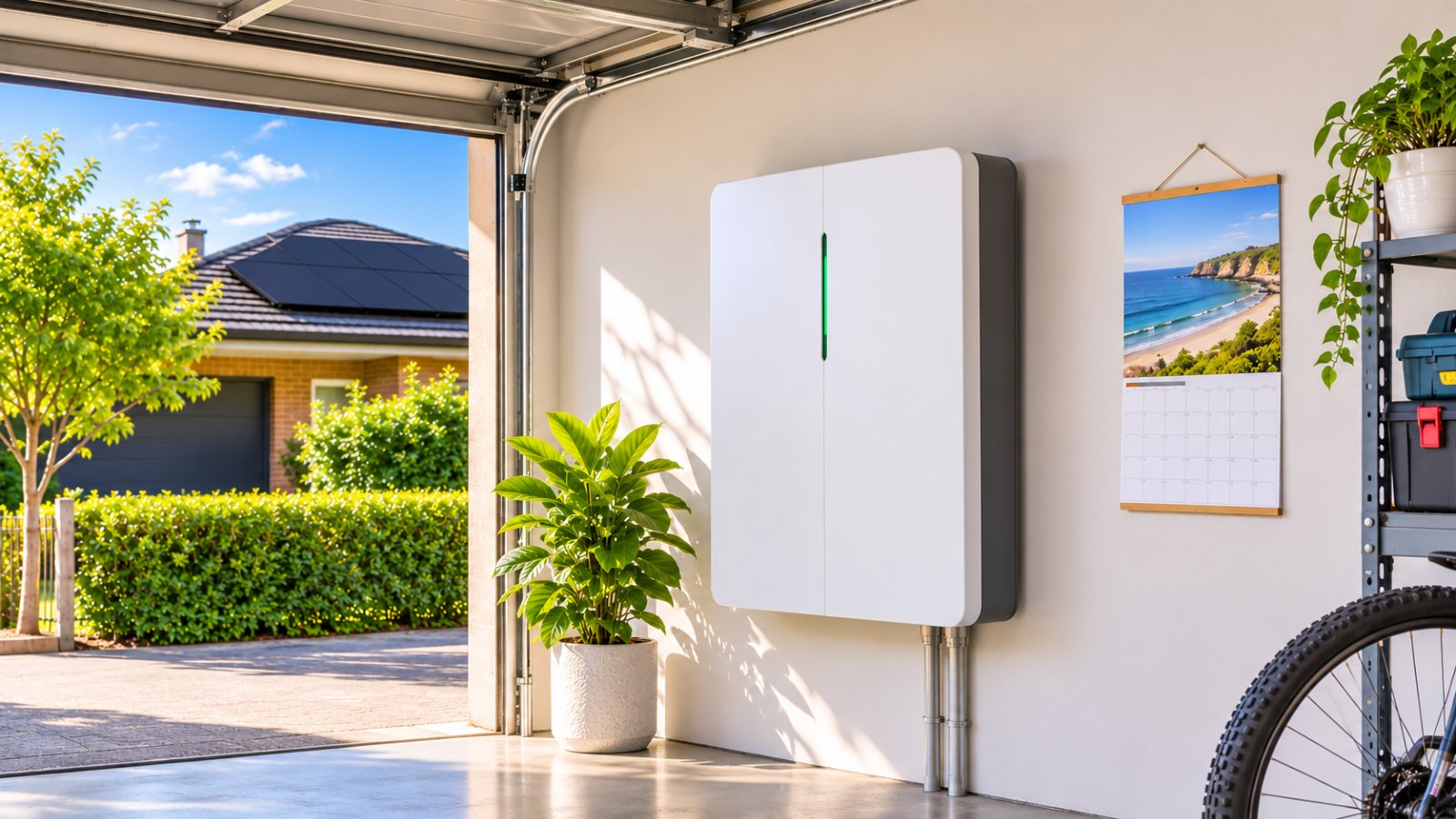
If you have been thinking about a home battery, you have probably seen ads saying “the rebate ends 31 December”. That is not quite right. Below we explain exactly what the battery rebate 2027 change means, how much it costs you in real dollars, what Victorians can still claim, and how to decide whether to install now or wait. No pressure, just the numbers.
Battery rebate 2027: what exactly changes on 1 January?
The Cheaper Home Batteries Program started on 1 July 2025. It works through the Small-scale Renewable Energy Scheme: when an eligible battery is installed, it creates Small-scale Technology Certificates (STCs), and your installer passes their value to you as an upfront discount.
The number of STCs you receive per kWh is called the STC factor. It is being reduced on a fixed schedule:
| Battery installed between | STC factor (per kWh) | Change |
|---|---|---|
| 1 May 2026 – 31 December 2026 | 6.8 | Current rate |
| 1 January 2027 – 30 June 2027 | 5.7 | About 16% lower |
| From 1 July 2027 | 5.2 | About 9% lower again |
| Every six months after | Keeps stepping down | Program runs to 31 December 2030 |
So 1 January 2027 is one step in a staircase, not a cliff. There will be another step on 1 July 2027, and more after that.
How is the battery rebate calculated?
Since 1 May 2026, the rebate also depends on how big your battery is. The Clean Energy Regulator applies the STC factor in three tiers:
- First 14kWh: 100% of the STC factor
- Each kWh from 14 to 28kWh: 60% of the STC factor
- Each kWh from 28 to 50kWh: 15% of the STC factor
Batteries must be between 5kWh and 100kWh to be eligible, but STCs are only created for the first 50kWh.
The simple formula:
Rebate ≈ eligible kWh (after tiers) × STC factor × STC price
The STC price moves with the market. Most installers currently pass on somewhere around $37 per STC after fees. That is the figure we use in the examples below.
How much will the battery rebate 2027 change cost you? (Victorian examples)
Here is the estimated difference for common battery sizes, assuming an STC price of $37:
| Usable battery size | Rebate if installed by 31 Dec 2026 | Rebate if installed from 1 Jan 2027 | Estimated loss |
|---|---|---|---|
| 10kWh | ~$2,516 | ~$2,109 | ~$407 |
| 13.5kWh (e.g. Tesla Powerwall 3) | ~$3,367 | ~$2,812 | ~$555 |
| 25kWh | ~$5,180 | ~$4,329 | ~$851 |
| 30kWh | ~$5,698 | ~$4,773 | ~$925 |
| 42kWh | ~$6,142 | ~$5,143 | ~$999 |
Estimates only. Your actual rebate depends on the battery’s certified usable capacity, the STC price your installer offers, and STCs being rounded to whole certificates.
Two things stand out:
- The loss is real, but it is not huge. For most homes it sits between $400 and $1,000.
- Bigger batteries get much less rebate per kWh. Going from 30kWh to 42kWh adds 12kWh of storage but only around $440 of extra rebate. Choose your size based on your evening usage, not on chasing the rebate. Our solar battery buyer’s guide explains how to size a battery properly.
Does Victoria have its own battery rebate?
No, not right now. Solar Victoria’s battery rebate has closed, and its interest-free battery loan is no longer taking applications because funding was used up. In Victoria, the federal Cheaper Home Batteries discount is the only battery incentive.
But Victorians can still stack other benefits around a battery:
- Solar panel rebate: If you are installing solar and a battery together, the Solar Homes Program offers up to $1,400 off solar panels, plus an optional interest-free loan of the same amount. Since 1 July 2026, your combined household income must be $150,000 a year or less. See our Victoria solar rebates guide.
- Midday Power Saver: Since 1 October 2026, eligible Victorian households with a smart meter can opt in to free grid electricity from 11am to 2pm (up to 24kWh a day). A battery lets you store that free power and use it in the evening peak. Read more in our free power guide.
- Virtual Power Plants (VPPs): Some retailers pay you or give credits for letting them use your battery at peak times. Compare options in our best VPP provider guide.
The installation date is what counts: what that means in December
The rebate is set by the date your battery is installed and commissioned, not the date you sign a contract or pay a deposit. If you sign on 15 December but the install happens on 5 January, you get the lower 2027 rate.
Things that can push an install past 31 December:
- Switchboard upgrades: Older Victorian homes often need switchboard work before a battery can be connected.
- Network approval: Your distributor (such as Jemena, AusNet, CitiPower, Powercor or United Energy) may need to approve the system, especially for larger inverters.
- Stock: Popular models can sell out in the weeks before a rebate step-down.
- Holiday shutdowns: Many installers and suppliers slow down between Christmas and early January.
Our advice: If you want to install before the change, get your quote and site check done in November or early December. Ask your installer to confirm in writing the expected install date and the rebate amount.
How to spot a fake deadline (and pressure selling)
Rebate changes are a magnet for high-pressure sales. Watch out for:
- 🚩 “The rebate ends on 31 December.” False. It reduces; it does not end.
- 🚩 “Sign today or lose thousands.” The real difference is usually $400–$1,000. Look at the table above.
- 🚩 Oversized batteries “to maximise the rebate”. Above 28kWh, the rebate per kWh drops to just 15%.
- 🚩 A quote that doesn’t show the STC count or rebate amount. A proper quote lists the number of STCs and the dollar discount.
- 🚩 Unapproved equipment or installers. The battery must be on the Clean Energy Council’s approved products list, and the installer must be accredited with Solar Accreditation Australia.
A good installer will happily show you the maths and let you take a few days to decide.
Battery rebate 2027: should you install now or wait?
Installing before 31 December 2026 makes sense if:
- You were already planning a battery in the next 6–12 months
- Your home has high evening electricity use or an EV that charges at night
- A site check shows no major switchboard or approval delays
- You want to start using Midday Power Saver or a VPP straight away
Waiting is fine if:
- You are still unsure what size you need, or how much power you use in the evening
- Your roof or switchboard needs work that can’t be done in time
- You are waiting on new models or better pricing
Remember: the battery rebate 2027 change is not the last one. Every six months you wait, the rebate steps down again. On the other hand, battery prices have been falling too. There is no single right answer. It depends on your bills and your home.
5-point checklist before you sign
- Check your evening usage on your electricity bill or retailer app (kWh used after 5pm).
- Get a written quote showing battery model, usable kWh, number of STCs and the rebate in dollars.
- Confirm the install date and what happens if it slips into 2027.
- Check your switchboard and phase (single or three-phase) during the site visit.
- Ask about warranty and monitoring. Look for at least a 10-year battery warranty and an app you can actually use.
Frequently asked questions
Is the federal battery rebate ending in 2027?
No. On 1 January 2027 the STC factor drops from 6.8 to 5.7 per kWh, about 16% less. The Cheaper Home Batteries Program keeps running, with further reductions every six months until 31 December 2030.
How much is the battery rebate in Victoria in 2027?
From 1 January 2027, a typical 10kWh battery will receive about $2,100, and a 13.5kWh battery about $2,800, assuming an STC price of $37. Larger batteries receive less per kWh because of the size tiers.
Does the rebate depend on when I sign or when the battery is installed?
It depends on the installation date. A battery installed on or after 1 January 2027 gets the lower rate, even if you signed the contract in 2026.
Is there a Victorian state battery rebate in 2026?
No. Solar Victoria’s battery rebate and interest-free battery loan are closed. Victorians can still claim the federal Cheaper Home Batteries discount, and the Solar Homes rebate of up to $1,400 for solar panels if eligible.
Can I get the battery rebate if I already have solar panels?
Yes. The federal battery discount applies to eligible batteries added to an existing solar system, as long as the battery and installer meet the program rules.
Is a bigger battery always better for the rebate?
No. The first 14kWh gets the full rate, 14–28kWh gets 60%, and 28–50kWh gets only 15%. For many Victorian homes, a battery between 10kWh and 20kWh gives the best value.
Get an honest quote before the battery rebate 2027 change
Eco Aspire Energy is a 100% Australian-owned, Solar Victoria Authorised Provider based in Somerton, installing CEC-approved batteries across Melbourne and regional Victoria. We’ll show you the exact STC count, rebate amount and expected install date in writing, with no pressure and no fake deadlines.
👉 Get a free battery quote or call 1300 170 852.
Sources: Clean Energy Regulator (battery rebate changes from 1 May 2026); Solar Victoria (Solar Homes Program eligibility); Victorian Government (Midday Power Saver). Rebate figures are estimates and may change if government policy changes. We will update this article if they do.