
Solar Panel Cleaning Australia: Do You Really Need It?
Solar energy is one of the smartest investments for Australia’s homes and businesses. Solar energy can be harnessed across Australia, including Melbourne, Perth, Brisbane, and Adelaide, helping homeowners and businesses reduce their increasing costs of electricity and protect the environment by reducing carbon footprint. However, solar panel owners still ask themselves a pertinent question: Do solar panels really need to be cleaned? And if they do, does it really make a difference and is it worth the expense?
Table of Contents
ToggleIn this comprehensive guide, we will discuss and explore the realities of solar panel cleaning Australia. We will discuss the science behind solar panel efficiency, weather conditions in Australia, and if it is worth it to hire a professional or clean it yourself. By reading this article, you will be able to determine how to clean solar panels effectively.
Why Solar Panel Cleaning Matters in Australia
The panels use the sun’s rays to make electricity. The more sunlight the panels get, the more power they can make. However, each day, the panels can collect dirt, dust, pollen, leaves, bird droppings, and even ash from bush fires that can cover the panels, preventing sunlight from getting through.
According to solar experts, dirty solar panels can reduce the amount of power produced by as much as 15% to 25% or more. This means that people can be throwing money away if they let the panels get too dirty.
The Australian Dust Factor
Australia is known for its red dust. In rural areas, this dust can settle on panels quickly. Unlike rain in the UK or Europe, Australian rain can sometimes be scarce in certain regions, meaning dust accumulates for months without a natural wash.
Bird Droppings
Australia has a high population of birds, including pigeons and parrots. Bird droppings are acidic. If left on a panel, they can etch the glass surface permanently. This creates “hot spots” where the panel gets hotter than the rest, potentially damaging the cell underneath.
Heat and Efficiency
Solar panels actually lose efficiency when they get too hot. Dirt acts as an insulator, trapping heat against the panel. By keeping panels clean, you help them stay cooler, which actually improves their electrical output. This is a crucial point often overlooked in solar panel cleaning Australia discussions.
Why Is Solar Panel Cleaning Important?
Cleaning your solar panels is important because it ensures that your solar panels receive direct sunlight to generate enough electricity. If dirt, dust, bird droppings, pollen, leaves, or ash from bushfires accumulates on the panels, it prevents direct sunlight from getting to your solar cells. In Australia, it is especially important to clean your solar panels regularly due to our dry climate, salt spray from the coast, and dust storms during certain times of the year.
If your solar panels are not cleaned regularly, it can lead to reduced energy output by 5–20% over time, which means you pay more for your energy and receive lower savings.
The Cost of Neglect: Is It Worth Cleaning?
To decide if you need cleaning, you need to look at the Return on Investment (ROI).
The Math Behind the Savings: Let’s assume you have a standard 6.6kW solar system.
- Average Daily Generation: 25 kWh (kilowatt-hours).
- Efficiency Loss due to Dirt: 10% (conservative estimate).
- Lost Generation: 5 kWh per day.
- Annual Loss: 5 kWh x 365 days = 912.5 kWh.
- Cost of Electricity: Let’s say $0.30 per kWh.
- Financial Loss: 5x$0.30 = $273.75 per year.
If you pay a professional cleaning service $200 to clean your panels, you will make that money back in less than a year. If you clean them every two years, the savings are even higher.
How Often Should You Clean Solar Panels?
The frequency of solar panel cleaning depends on your location and environmental conditions. In general, experts recommend cleaning every 6–12 months, but some areas may need more frequent maintenance. Consider the following factors:
- Coastal Areas: Salt spray can accumulate quickly — clean every 3–6 months.
- Dusty or Rural Regions: Dirt and dust build-up may require cleaning every 3–4 months.
- Urban Homes Near Trees or Traffic: Pollen, leaves, and pollution may need panels cleaned more often.
- After Major Weather Events: Inspect and clean panels following bushfires, dust storms, or long dry periods.
- Performance Monitoring: If your system shows a drop in energy output without weather changes, it may be time for cleaning.
Regular cleaning ensures your panels operate efficiently, extend their lifespan, and maximize your energy savings.
DIY Solar Panel Cleaning vs. Professional Services
This is where many homeowners get into trouble. You might see a hose in the garage and think, “I can do this myself.” While DIY seems cheaper, it comes with significant risks.
The Risks of DIY Cleaning
- Safety: Climbing onto a roof is dangerous. In Australia, roof safety is a major concern. Falls from roofs are a leading cause of injury. If you slip, you risk serious injury.
- Warranty Voiding: Many solar panel manufacturers have strict warranty terms. If you use the wrong chemicals or scrub too hard, you might scratch the glass. If the manufacturer finds out you cleaned it improperly, they may void your warranty.
- Water Pressure: Using a high-pressure hose can force water behind the panels. This can damage the electrical connections and cause short circuits.
- Temperature: Cleaning panels in the middle of a hot Australian summer can cause thermal shock. If the panels are hot and you splash cold water on them, the glass can crack.
System and safety checks
Maintaining your solar system isn’t just about cleaning the panels, regular system and safety checks are essential to keep your system running efficiently and safely.
Anti-islanding check (or PV inverter test)
Your solar inverter must safely connect to and disconnect from the electricity grid. This prevents electricity from feeding into the grid during a blackout, protecting utility workers and the local network. Some electricity distributors in Australia require an anti-islanding check at least once a year to ensure this safety feature is working correctly.
This test can be carried out by a licensed electrician accredited by Solar Accreditation Australia (SAA), or you can perform it yourself if you’ve been trained by an accredited installer. Regular checks ensure your inverter responds correctly in emergency situations.
Regular Inverter Check
During a service, your electrician will inspect your inverter to make sure it’s operating correctly and that the heatsinks and ventilation grills are clean. Anything preventing air flow could overheat the inverter in hot weather and reduce its life.
You can also check your inverter in between services. Make sure it is free of dirt, dust, spider webs or vermin. Check it is running normally and talk to your installer about any error lights or warning codes on the display.
Step-by-Step: What Happens During a Professional Clean?
If you decide to book a service, what can you expect?
- Site Assessment: The technician will inspect the roof for safety and check the panel condition.
- Setup: They will set up safety equipment and water tanks.
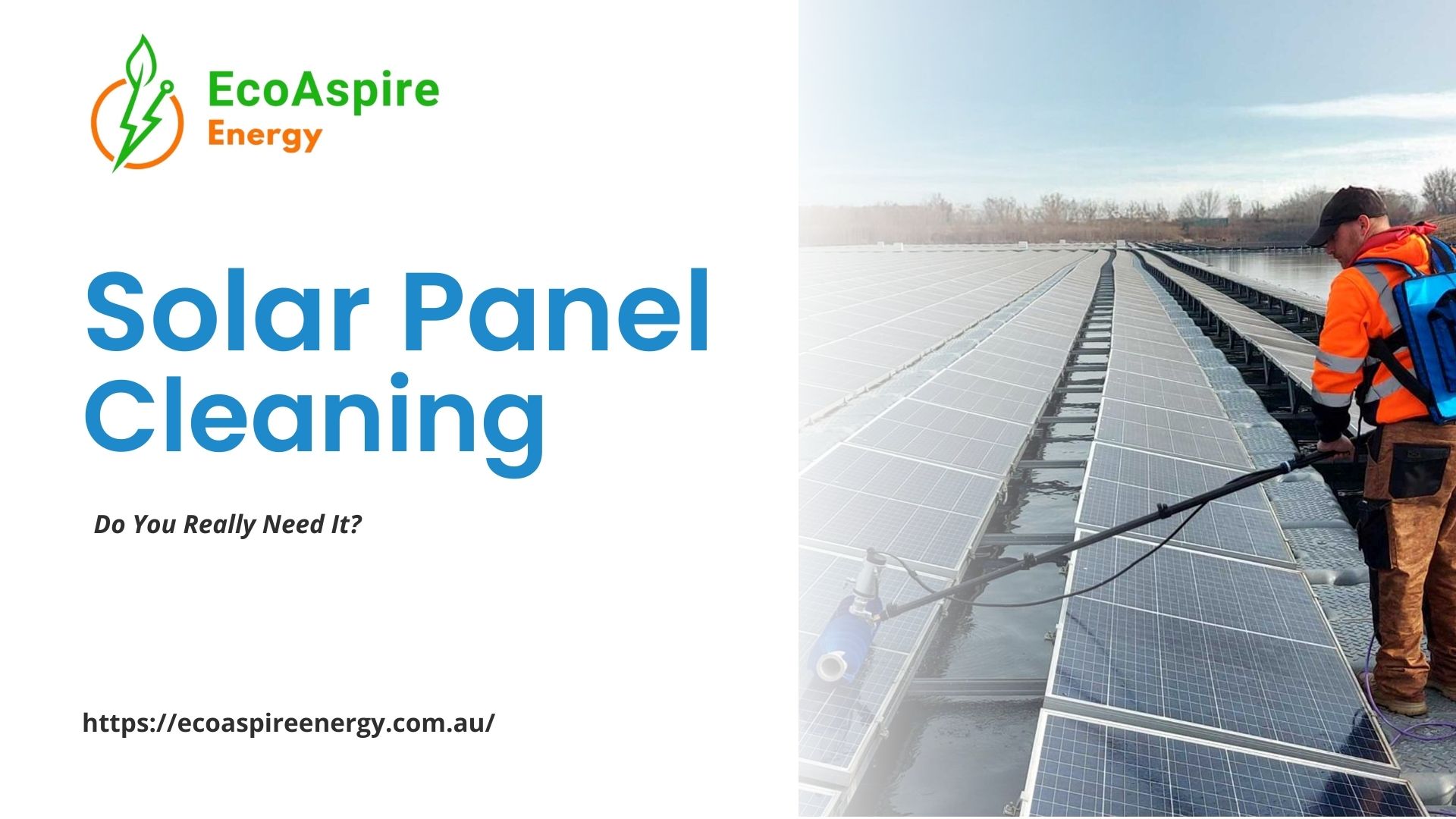
- Cleaning: Using soft brushes and purified water, they gently scrub the surface.
- Rinsing: They rinse off the loosened dirt.
- Inspection: They check the inverter and wiring for any issues.
- Report: You will receive a report on the condition of your system.
How Much Does Solar Panel Cleaning Cost in Australia?
Solar panel cleaning in Australia typically costs between $10 and $30 per panel, with most homeowners paying an average of $12–$20 per panel or roughly $200–$500 per service. Costs vary based on the number of panels, roof accessibility (single vs. double storey), and location, often with 6.6kW systems costing less per panel than larger, 40-panel setups.
Key Cost Breakdown (Approximate):
- Per Panel: $10 to $30
- Small System: $100 to $300
- Medium/Large System: $200 to $600+
- Double Storey Premium: Extra costs may apply for hard-to-access roofs.
Eco-Friendly Solar Cleaning: A Priority for Eco Aspire Energy
At Eco Aspire Energy, we believe that going green shouldn’t stop at installation. It should continue through maintenance. Traditional cleaning methods often use gallons of water and harsh chemicals. This is not sustainable. We focus on eco-friendly solar cleaning methods.
Our Approach
- Deionized Water: We use purified water that doesn’t leave mineral spots. This means no need for drying, which saves time and water.
- Soft Brushes: We use soft bristles that clean without scratching the anti-reflective coating.
- Water Conservation: We use high-efficiency equipment to minimize water usage.
- No Chemicals: We avoid harsh detergents that can run off into your garden soil.
[Disclaimer: The information provided in this article is for educational and informational purposes only. While efforts have been made to ensure accuracy, the author makes no guarantees regarding completeness or correctness. Please consult a qualified battery and solar installer to ensure that the information is current, accurate, and compliant with applicable regulations in your jurisdiction.]